All-in-one AI creative studios are reshaping how digital content is produced. Instead of juggling separate tools for video, voice, scripting, and editing, creators and teams now rely on unified platforms that manage the entire production workflow. This shift reduces costs, accelerates output, and improves consistency across content libraries.
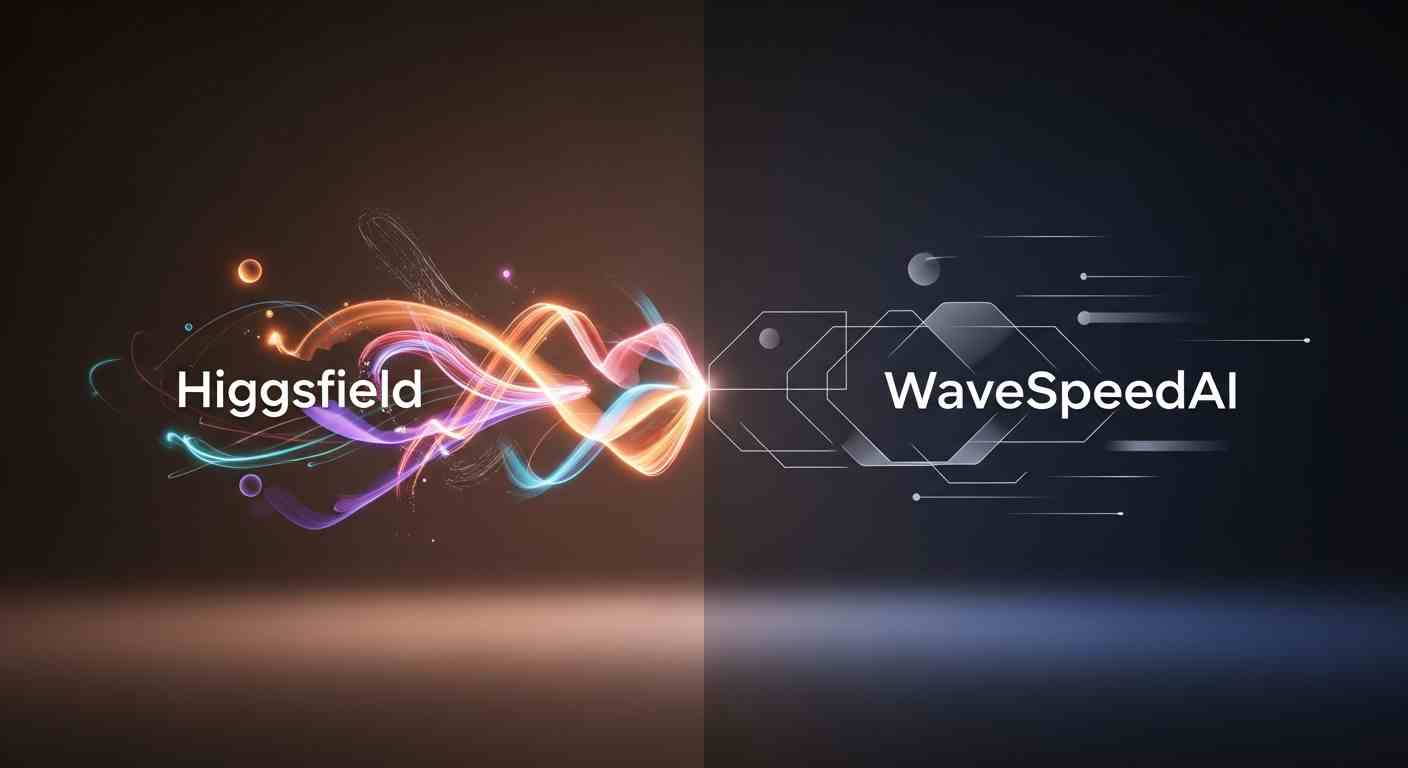
Higgsfield and WaveSpeedAI are two platforms competing directly in this space. Both promise end-to-end AI content creation, but they are built around very different production philosophies. This comparison breaks down which subscription delivers more value depending on how your team actually creates content.
Why AI Studio Subscriptions Matter
AI studio subscriptions are no longer experimental tools. They are becoming core infrastructure for marketing teams, agencies, and content-driven businesses. The ability to generate video, voice, and scripted content from a single platform directly impacts speed, scalability, and creative control.
Choosing the right AI studio is less about feature count and more about workflow alignment. Higgsfield and WaveSpeedAI both solve content production at scale, but they optimize for different operational priorities.
Platform Positioning and Target Users
Higgsfield is positioned for creators and agencies that value creative control and output quality. It is commonly used for branded content, marketing campaigns, and client-facing media where customization matters.
WaveSpeedAI is positioned as a production automation platform. It targets teams that prioritize speed, volume, and repeatability. Its design favors operational efficiency and scalable pipelines over manual creative adjustment.
This positioning difference shapes every other aspect of the platforms.
Core Feature Coverage
Higgsfield provides a broad creative toolkit that includes AI video generation, AI voice and narration, script and content assistance, scene-level editing, and asset and project management. The platform emphasizes flexibility, allowing creators to refine outputs manually when precision is required.
WaveSpeedAI offers similar core capabilities but leans heavily into automation. Batch generation, templates, and pre-configured workflows reduce hands-on input and speed up production at scale.
Both cover essential features, but the user experience feels fundamentally different.
Creative Control and Output Quality
Higgsfield delivers stronger control over visual style, pacing, and presentation. This makes it well suited for brand-driven content where tone, aesthetics, and polish directly affect results. Outputs tend to feel more customized and intentional.
WaveSpeedAI prioritizes consistency and throughput. Visual quality is reliable, but customization options are more constrained. The platform works best for standardized formats rather than bespoke creative projects.
The trade-off is refinement versus speed.
Workflow Speed and Production Efficiency
WaveSpeedAI is optimized for rapid output. Automated pipelines enable teams to generate large volumes of content with minimal intervention. This is ideal for high-frequency publishing and operational scale.
Higgsfield workflows take longer by design. The platform allows more checkpoints and adjustments, supporting quality-focused production and iterative refinement.
If speed is the primary KPI, WaveSpeedAI has the advantage. If quality drives business value, Higgsfield performs better.
Integration and Automation Depth
Higgsfield integrates with common creative and marketing tools, supporting flexible workflows across teams. Automation exists but is secondary to manual creative control.
WaveSpeedAI emphasizes automation infrastructure. API access, logic-driven workflows, and system-level integrations make it suitable for programmatic content generation and large-scale deployment.
Automation maturity is stronger in WaveSpeedAI, while Higgsfield excels in adaptable creative workflows.
Pricing Model and Subscription Value
Higgsfield pricing reflects its creative focus. The subscription delivers strong ROI when content quality influences brand perception, conversions, or client outcomes.
WaveSpeedAI pricing is optimized for scale. Value increases as production volume grows, with ROI driven by reduced labor and faster turnaround times.
The better subscription depends on whether quality or volume produces more business impact.
Strengths and Limitations
Higgsfield Strengths
Strong creative control and customization.
High-quality, brand-ready output.
Well suited for agencies and marketing teams.
Higgsfield Limitations
Slower bulk production.
Less automation depth.
WaveSpeedAI Strengths
High-speed automated content generation.
Scalable production pipelines.
Efficient for repetitive content.
WaveSpeedAI Limitations
Reduced creative flexibility.
Limited cinematic control.
Best Use Cases for Each Platform
Choose Higgsfield if your business depends on creative differentiation, branding, and professional-quality media output.
Choose WaveSpeedAI if your business depends on speed, automation, and large-scale content production.
Both platforms reduce tool sprawl, but they support very different production strategies.
Frequently Asked Questions
Is Higgsfield better for professional video creators?
Yes. Higgsfield offers finer control and higher polish, which aligns with professional and agency workflows.
Is WaveSpeedAI more automated than Higgsfield?
Yes. WaveSpeedAI focuses heavily on automation, batch processing, and scalable pipelines.
Can these platforms replace multiple AI tools?
Yes. Both consolidate video, voice, and content creation into a single environment.
Are these tools suitable for agencies?
Both can work for agencies, but Higgsfield is better for client-specific creative work.
Which platform is more cost effective?
WaveSpeedAI is often more cost effective for high-volume production, while Higgsfield delivers value through output quality.
Conclusion
Higgsfield and WaveSpeedAI represent two strong but different approaches to all-in-one AI content creation. One prioritizes creative excellence and control, while the other prioritizes automation and speed.
The right subscription depends on how your team creates content at scale. In 2026, the best AI studio is not the one with the most features, but the one that aligns with your production reality, risk tolerance, and growth strategy.